Key takeaways
- A Sri Lanka food tour works best over three to five days on one stretch of coast or hill country, not as a single afternoon.
- The three things to eat before anything else are kottu, hoppers and a proper rice and curry from a local shop rather than a hotel.
- Breakfast is the most distinctive meal here, and most visitors sleep through it.
- Regional differences are real. Jaffna food is hotter and uses more tamarind, the east is heavily Muslim influenced, the hills are more vegetarian.
- Short eats from a bakery counter cost very little and tell you more about daily eating than any restaurant will.
Eat breakfast like a local, once
Most visitors have hotel breakfast, which is eggs and toast and a sad fruit plate. Sri Lankan breakfast is the meal worth setting an alarm for.
Hoppers, called appa here, are bowl shaped pancakes of fermented rice flour and coconut milk, cooked in a small curved pan so the middle stays soft and the edges go lacy and crisp. An egg hopper has an egg cracked into the centre. You eat them with sambol and a thin curry, tearing the edges off with your fingers.
String hoppers are different: steamed nests of pressed rice flour noodles, eaten with dhal and a coconut gravy. They come stacked and you take four or five.
Both are made fresh and both are effectively impossible to find after about ten in the morning. This is the single most common thing visitors miss.
Kottu, which you hear before you see
Walk past any kottu shop in the evening and you will hear the noise first. Two metal blades on a hot steel plate, chopping roti, vegetables, egg and meat together in a rhythm the cook keeps up for the whole order.
Kottu is late night food, cheap and enormous. Order it with cheese if you want to know what Sri Lankans actually order, which is not the version aimed at visitors.
It is also a good test of a place. A shop with a queue of locals at nine in the evening is worth eating at. A shop with a laminated English menu and photographs is usually not.
Rice and curry, from a shop rather than a hotel
The rice and curry served in a beach hotel has been adjusted. Milder, fewer dishes, white rice instead of red.
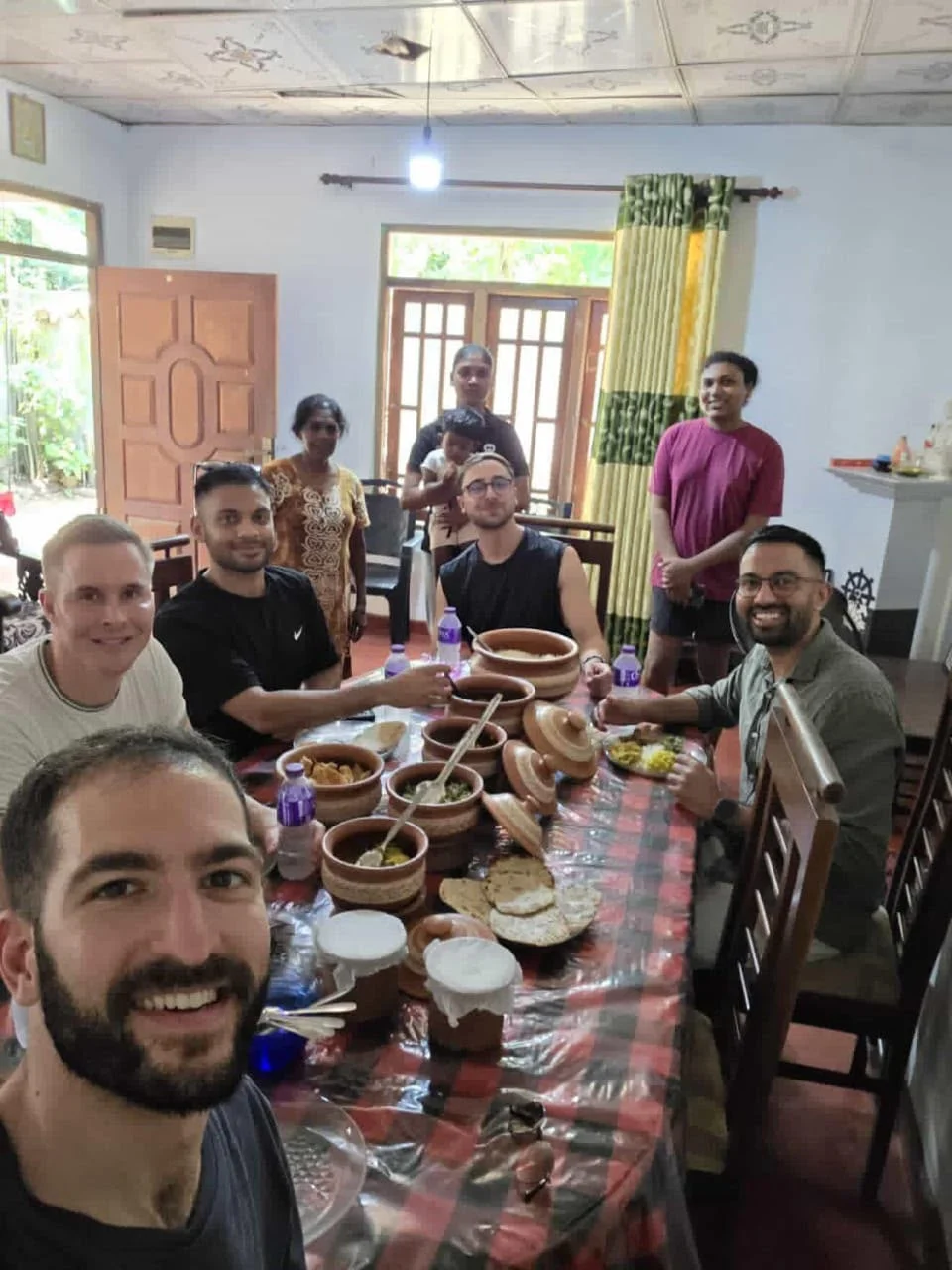
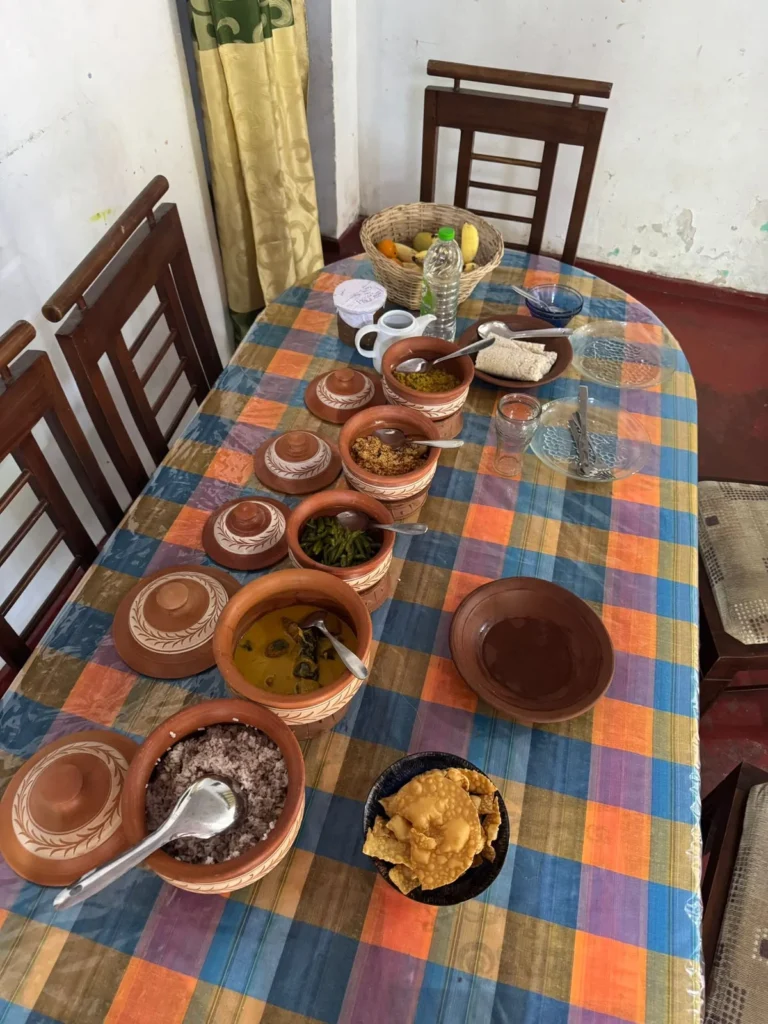
Find a small shop inland at lunchtime where the food is already cooked and sitting in pots. Point at what you want. You will get rice with six or seven things around it for a fraction of hotel prices, and it will be better.
This is also where you meet the dishes that never reach tourist menus: banana blossom, breadfruit, bitter gourd, dried fish sambol. We wrote in more detail about how a rice and curry plate is built if you want the anatomy of it.
Short eats and the bakery counter
Every town has bakeries with a glass counter of fried things, and Sri Lankans eat them constantly.
Fish rolls, crumbed and fried around a spiced fish filling. Cutlets, which are round rather than flat. Malu paan, a fish bun. Vegetable roti, folded into a flat triangle.
You pay by the piece and nothing costs much. Buy four different things, eat them standing up, and you have learned more about how people actually eat here than a tasting menu would teach you.
Wash it down with plain tea, which arrives very sweet unless you say otherwise. Ceylon tea is the obvious thing to drink and the hill country plantations are worth a detour if your route goes inland.
Regional differences worth planning around
Sri Lanka is small and the food changes noticeably across it.
The south coast, around Galle, Weligama and Mirissa, is fish country. Ambul thiyal, prawn curries, coconut in nearly everything.
Jaffna and the north cook hotter, with more tamarind and a distinct crab curry that is worth the journey on its own.
The east, around Batticaloa and Kattankudy, has a strong Muslim influence, which means buriyani, watalappan and more grilled meat.
The hill country around Kandy and Ella is more vegetarian, partly for religious reasons and partly because it is furthest from the sea.
One dish crosses all of it and belongs to none: lamprais, a Dutch Burgher creation of rice, meat, sambol and a fried egg baked inside a banana leaf. It is a colonial hybrid and one of the best things on the island.
Lonely Planet is useful on distances here, which matter more than they look on a map. Roads are slow and a hundred kilometres can take four hours.
Building a food tour that works
Three to five days, one region. Trying to eat across the whole island in a week means spending most of it in a car.
Anchor it with one cooking class early on. Once you have cooked a rice and curry yourself, everything you eat afterwards makes more sense, because you know what is in it. Our guide to cooking with local families covers how that works.
Build in a market visit. Early morning, ideally with someone who can name things.
Leave meals unplanned. The best food here is found by stopping somewhere that looks busy, not by booking ahead.
Pace the spice. Visitors who eat every meal at full local heat for four days regret it. Alternate.
If your route includes Galle, the fort is a good base with genuinely good eating inside and around it.
Frequently asked questions
How many days do you need for a Sri Lanka food tour?
Three to five days in one region gives you enough without spending the trip travelling. A full island food tour needs two weeks.
What should I eat first in Sri Lanka?
Hoppers for breakfast, rice and curry from a local shop for lunch, kottu in the evening. Those three cover the range.
Is street food safe in Sri Lanka?
Generally yes at busy places where food is cooked to order or turns over quickly. Drink bottled or filtered water and be more careful with anything sitting uncovered.
What is the best region for food?
The south coast for seafood, Jaffna for the hottest and most distinctive cooking, the east for Muslim influenced dishes. There is no single best, they are genuinely different.
How much does eating cost?
A rice and curry plate at a local shop costs a few hundred rupees. Short eats cost less. Hotel restaurants cost many times more for worse food.
Should I book food tours in advance?
Book cooking classes ahead, since households shop for you. Leave restaurants and street food unplanned.
Is Sri Lankan food good for vegetarians?
Very. Most of a standard plate is plant based already. We covered this in our vegan and vegetarian guide.
Want a food trip planned properly?
We live on the south coast and eat here every day, so we know which shops are worth stopping at and which are for the buses. If you want a food focused itinerary with a class or two built in, tell us how long you have. A car and driver makes this kind of trip much easier, and our Sri Lanka tours can be reshaped around food.
Related reading
This is one of a series on eating and cooking in Sri Lanka. For the wider picture, see our guide to the best food experiences in Sri Lanka, and if you are still choosing a class, our guide to picking the best cooking class in Sri Lanka.